
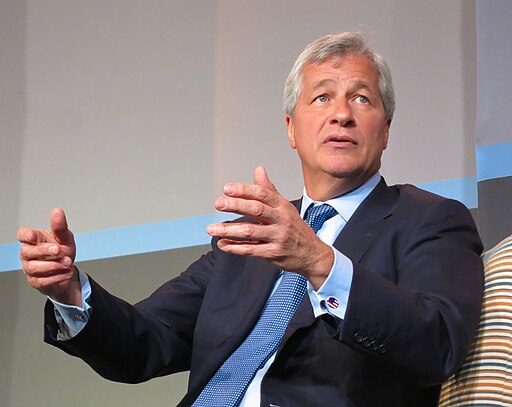
JPMorgan Chase has argued that President Donald Trump improperly named its chief executive Jamie Dimon as a defendant in a $5 billion lawsuit, contending that the move was designed to keep the case in state court.
In a filing in federal district court in Miami, the bank and Dimon said Trump’s claim that Dimon engaged in unfair trade practices does not apply to bank officers who are directly regulated by federal banking agencies. The defendants are seeking to move the case from Miami-Dade County court to federal court, before potentially pursuing a transfer to Manhattan. Corporate defendants often favour federal venues for complex commercial disputes.
Trump filed the lawsuit in January in his personal capacity, alleging that JPMorgan debanked him after it closed some of his accounts in 2021, shortly after his first term ended. The complaint also accuses the bank of trade libel, claiming it placed him on a banking “blacklist”. Trump is seeking $5 billion in damages.
JPMorgan and Dimon denied the allegations in their court filing and said they were unaware of any blacklist. The bank’s submission focuses on jurisdictional arguments, asserting that Dimon was improperly included as a defendant and that the claims against him lack legal basis under the cited trade practices framework.
A spokesperson for Trump’s legal team said the bank and its chief executive had debanked and blacklisted Trump, his family and their businesses, alleging the actions were motivated by opposition to his policies. The lawsuit against JPMorgan is one of at least six Trump has initiated in his personal capacity since returning to the presidency.
The federal court will first address whether the case should proceed in that forum. The dispute over Dimon’s inclusion highlights the procedural manoeuvring often seen in high-profile commercial litigation, where venue can shape the trajectory and timing of a case.